Skip to content
Silent Potato.
SearchTagsEN/中文
  • Start
  • Writing
  • Columns
  • Projects
  • Research
  • Work with me
  • Photos
  • About

Project · active

CanonLoom

A command-driven workflow for long-form novel production: the author drives with short commands, an Agent does the creative work, Python performs deterministic validation, and the author makes choices and approvals at every key checkpoint.
LiyukLiyukStarted August 3, 2026GitHub ↗System design paper ↗
  • #Agents
  • #Creative Writing
  • #Workflow
  • #Python
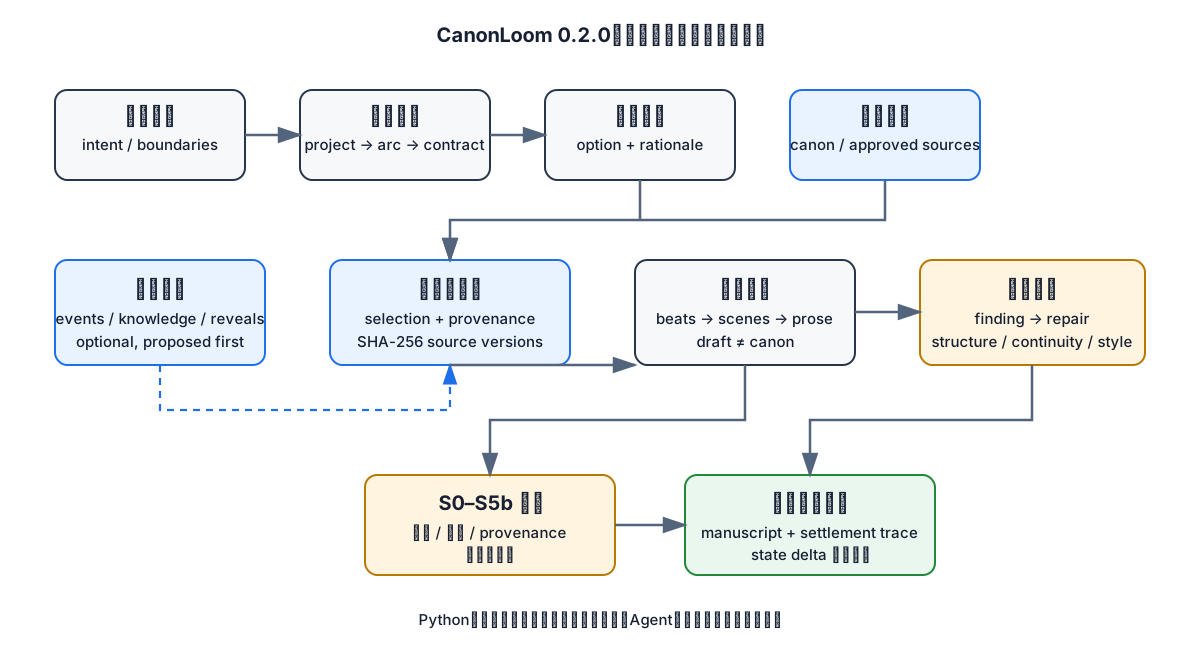
CanonLoom's system architecture diagram, showing the relationships between author intent, file protocol, restricted execution, and review settlement.
System architecture diagram, from CanonLoom's public design paper.

Share to

XWeiboTelegramWhatsAppLinkedInFacebook

WeChat

Scan with WeChat

Open this article on your phone, or forward it to a friend.

Enjoy this site?

orSubscribe via RSS
← PreviousVeylumi
Next →OurBook · Universities Through Our Eyes

Keep reading

Maybe related to this one.

  • ProjectEngineering Decision Skills: What I Want AI to Do in Reviews, Planning, and RetrospectivesA proposal is due for review, three projects do not fit the next planning cycle, and another delivery is late. Five independent skills, each with an input and a concrete output you can take into a discussion.View project →

    shared 2 tags

  • ProjectRelationForge: Make Sense of an Interaction Before You RespondSome relationships leave you uneasy, but you cannot quite say why. RelationForge can help you make sense of what happened, including your part in it.View project →

    shared 2 tags

  • ResearchLet the Agent Execute: Emotional Adaptation, Trust Calibration, and Human Relief from Execution PressureBased on long-task use, this paper examines how an Agent can adapt state, evidence, and action feedback to uncertainty, waiting, failure, and takeover needs, while documenting how delegated execution changes human pressure, trust, and capability boundaries.Read summary →

    shared 1 tag

© 2018–2026 Liyuk. Built slowly, published openly.

ElsewhereGitHub ↗X ↗LinkedIn ↗Email ↗Links ↗Favorites ↗RSS ↗
CC BY-NC-SA 4.0