Skip to content
Silent Potato.
SearchTagsEN/中文
  • Start
  • Writing
  • Columns
  • Projects
  • Research
  • Work with me
  • Photos
  • About

Project · active

dsh-skin-chatlab: An Extensible Chat Skin for the DSH Web

Using a base-plus-skin architecture to give the DSH Web GUI a switchable, uninstallable Feishu-style chat skin that touches no existing plugin: workspaces become project groups, sessions become contacts, and the chat becomes bubbles.

LiyukLiyukStarted August 16, 2026GitHub ↗
  • #Technology
  • #Agent Systems
  • #Developer Productivity
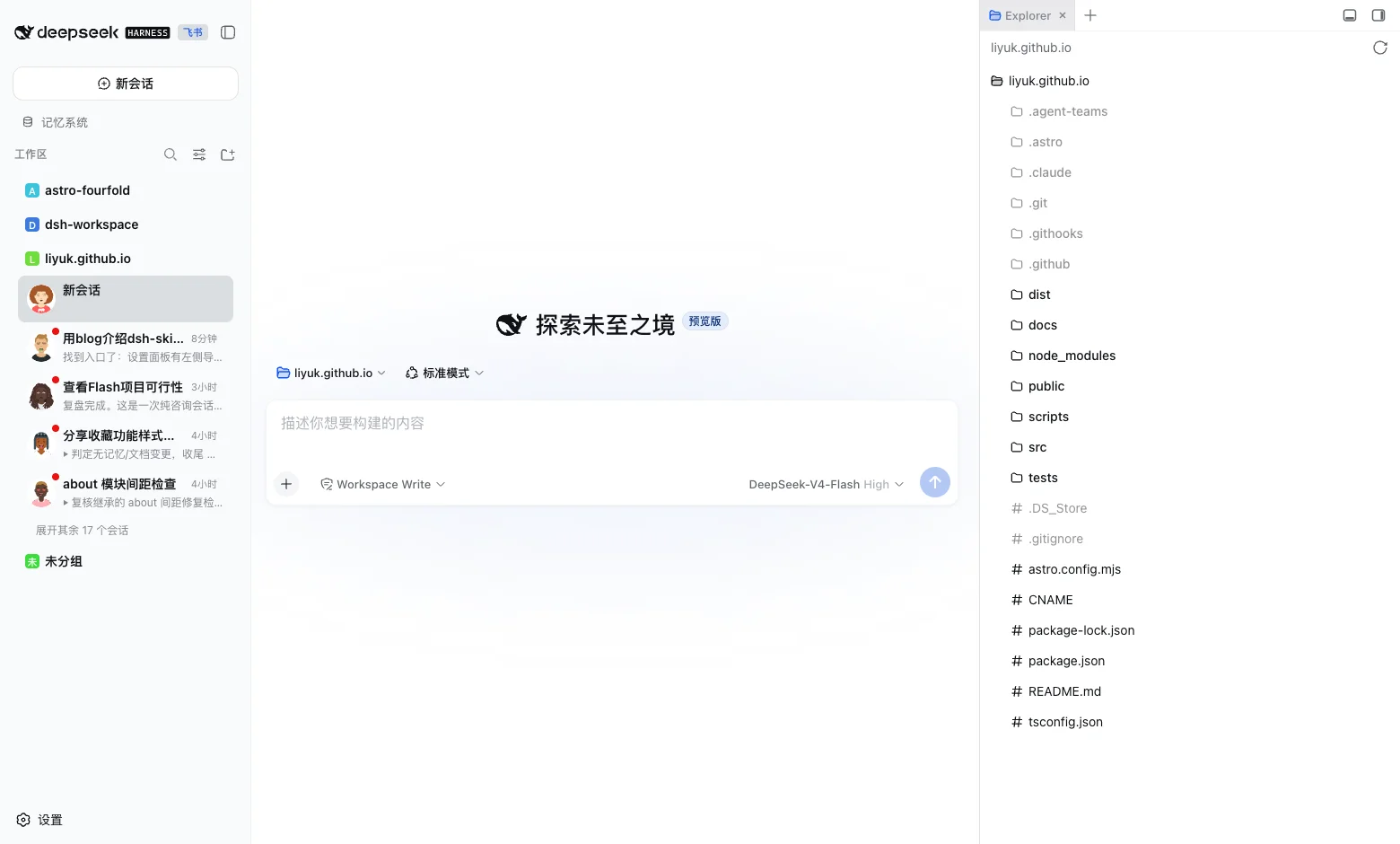
Feishu skin light main view: project groups and contacts on the left, a bubble chat window on the right.
Screenshot of the running skin: the session list and chat window under the Feishu skin.

Share to

XWeiboTelegramWhatsAppLinkedInFacebook

WeChat

Scan with WeChat

Open this article on your phone, or forward it to a friend.

Enjoy this site?

orSubscribe via RSS
← PreviousQuota Router: An Explainable Multi-Source Fallback Chain for DSH
Next →Neo Matrix

Keep reading

Maybe related to this one.

  • ResearchDefining the Boundaries Before Bringing AI Capability into an Engineering OrganizationA position paper based on the author's experience driving AI infrastructure and pilots in a real engineering organization: it proposes four kinds of boundaries—context, responsibility, authorization, and measurement—and offers a falsifiable pilot protocol plus a minimal harness as a demonstration of putting them into practice.Read summary →

    shared 3 tags

  • WritingFrom “It Runs” to Maintainable: Architecture and Stability Lessons from Building DSH PluginsA practical account of developing and debugging ChatLab, Agent Suite, and Quota Router, covering DSH plugin mechanics, common preview-version stability problems, and the boundaries that are easiest to get wrong when building plugins yourself.Read on →

    shared 3 tags

  • WritingMy DSH Workbench: Nine PluginsDSH has been out only a few days, and I've already installed nine plugins on it. Notes on what each one fills in, how it works, and which one is the most useful.Read on →

    shared 3 tags

© 2018–2026 Liyuk. Built slowly, published openly.

ElsewhereGitHub ↗X ↗LinkedIn ↗Email ↗Links ↗Favorites ↗RSS ↗
CC BY-NC-SA 4.0